

Promising Prospects for the Dry-Mix Mortar Market
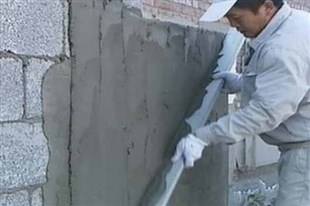
Growing preference for dry-mix mortar over traditional materials signals strong and promising prospects for its market.
Stakeholders across the construction industry continuously seek innovative materials and drive performance advancements in conventional materials like mortar. Factory-prepared, pre-packaged dry-mix mortar represents a significant upgrade from on-site batched mortar, boasting distinct advantages in product quality and performance. The shift from on-site batched mortar to dry-mix mortar, and from structural mortar to functional mortar, has fueled the adoption of dry-mix mortar additives. Specific applications—such as tile grout, tile adhesives, floor screeds, renders, and repair mortars—are increasingly leveraging these additives. Meanwhile, traditional applications including masonry work, base rendering, bricklaying, and glass block installation are also opting for dry-mix mortar over on-site batched alternatives, further boosting additive uptake.
Driven by rising focus on energy-efficient buildings and robust construction activity, along with expanded application scopes where dry-mix mortar and similar products serve as viable alternatives to concrete, the market is projected to experience steady growth over the next five to six years.
"Chemical additives like defoamers, plasticizers, water repellents, cellulose ethers, and air-entraining agents have become indispensable for dry-mix mortar, as the industry now favors functional mortar over structural variants," noted analysts of the study. "Additive demand aligns closely with that of dry-mix mortar, while also being shaped by emerging manufacturing and automated batching technologies."
In recent years, mortar formulations have undergone systematic modification through the incorporation of polymeric binders (redispersible polymer powders), specialized additives (cellulose ethers), and other performance-enhancing ingredients. These refinements elevate product quality to meet the evolving demands of the modern construction sector—and dry-mix mortar has proven to be the optimal carrier for such advanced formulations.
"Dry-mix mortar is exceptionally well-suited for integrating a full spectrum of additives, including defoamers, water repellents, redispersible polymer powders, cellulose ethers, air-entraining agents, and plasticizers," the analysts emphasized. "Each additive endows the mortar with unique, application-specific properties." For instance, air-entraining agents introduce uniformly distributed air bubbles to prevent cracking, while plasticizers help optimize the water-cement ratio. Defoamers mitigate uneven distribution of unwanted air bubbles, redispersible polymer powders enhance cohesion, adhesion, water retention, and workability, and cellulose ethers improve rheological performance and thixotropy. Water repellents, as the name suggests, serve as waterproofing agents within the mortar matrix. The ability of each additive to fulfill targeted application requirements makes them highly appealing to dry-mix mortar manufacturers.